
Our Vision
To help people in our community move with confidence and enjoy a more active, independent life.
Rediscover the ease of movement.
Thoughtful physiotherapy, shaped around you. With personalised care and practical guidance, we support your journey towards greater comfort, confident movement, and the everyday moments that matter.
Physiotherapy in Hindagolla, Kurunegala, centred on your movement, comfort, and everyday wellbeing.
To help people in our community move with confidence and enjoy a more active, independent life.
To provide personalised physiotherapy that supports movement, everyday function, and recovery through individual assessment, treatment, and practical guidance.
Compassion, respect, and clear communication guide our care. We value each person’s comfort, privacy, and individual goals.
Personalised care and practical guidance to support your movement and wellbeing.

Personalised assessment, movement guidance, and exercises to support back comfort and everyday activity.
Back pain can make sitting, bending, lifting, and everyday activities uncomfortable. Physiotherapy starts with understanding your symptoms, movement, and the activities that matter to you.
Care may include guided movement, appropriate strengthening exercises, and practical advice on pacing everyday tasks. Treatment is adapted to your assessment and comfort, with the aim of supporting movement and confidence rather than promising a fixed recovery time.
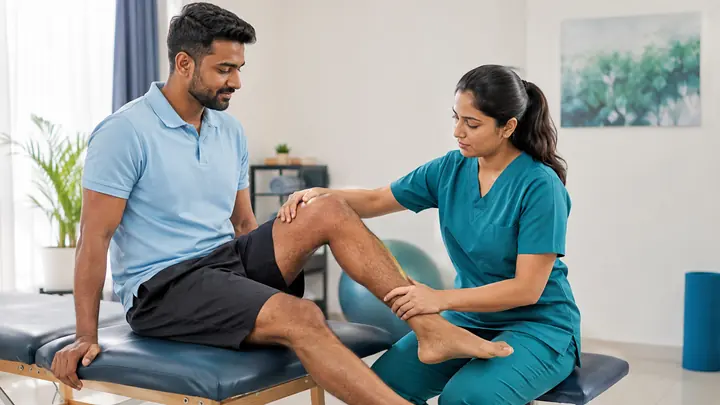
Targeted assessment and exercises to support knee movement, strength, and confidence with daily activities.
Knee pain may affect walking, using stairs, standing up, or taking part in exercise. Assessment considers your symptoms, knee movement, muscle strength, and how daily activities are affected.
A tailored programme may include mobility and strengthening exercises, movement guidance, and a gradual return to suitable activities. The approach depends on your needs and the likely cause of your symptoms; some problems also require medical assessment.

Assessment and guided movement for neck discomfort, stiffness, and comfortable daily activity.
Neck discomfort and stiffness can make it harder to turn your head or stay comfortable during work and rest. Physiotherapy considers your movement, symptoms, and everyday routines.
Care may include gentle mobility exercises, strengthening where appropriate, and practical guidance on changing position and managing activity. Exercises are selected for your comfort and needs, rather than using one routine for everyone.

Practical joint-care advice and tailored exercises to support mobility and manage day-to-day stiffness.
Osteoarthritis can cause joint pain, stiffness, and difficulty with everyday movement. Physiotherapy focuses on supporting joint function and helping you stay active in ways that suit you.
Care may include tailored strengthening and mobility exercises, a gradual activity plan, and practical advice for daily tasks. Physiotherapy does not cure osteoarthritis, but an appropriate programme can help you manage its effects on everyday life.

Gradually progressed strengthening exercises to support everyday movement and physical confidence.
Muscle weakness can make tasks such as standing up, walking, or lifting more difficult. An assessment considers which movements are affected and your current level of strength and activity.
Guided exercises can be started at a suitable level and progressed gradually. The focus is on controlled movement, manageable goals, and everyday function. New or unexplained weakness may need medical assessment before an exercise programme begins.

Gentle, individually guided facial rehabilitation to support movement and coordination, following medical assessment.
Facial weakness can affect expression, eye closure, and movements used for eating and drinking. Rehabilitation should follow medical assessment, because Bell's palsy is only one possible cause of facial weakness.
Where appropriate, gentle, individually guided rehabilitation focuses on facial movement and coordination. Guidance is adapted to your symptoms and stage of recovery, alongside any medical or eye-care advice you have received.
New or sudden facial weakness needs urgent medical attention. Facial drooping with arm weakness or difficulty speaking may be a stroke: seek emergency help rather than waiting for physiotherapy.
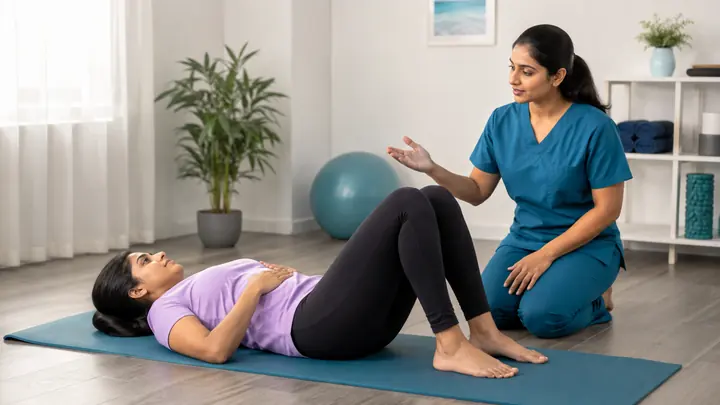
Individual guidance on pelvic floor muscle awareness, control, and exercises, adapted to your needs.
The pelvic floor muscles help support the pelvic organs and control the bladder and bowel. Good function involves both contraction and relaxation, so symptoms are not always simply a matter of muscle weakness.
Individual guidance may focus on recognising these muscles, coordinating movement and breathing, and practising appropriate exercises. Advice is adapted to your needs and comfort, with a respectful approach to any concerns you wish to discuss.

Assessment and guided exercises to support shoulder movement, strength, and everyday comfort.
Shoulder discomfort can make reaching, lifting, dressing, or sleeping on your side difficult. Assessment considers your symptoms, movement, strength, and the activities that matter to you.
Care may include gentle mobility work, gradually progressed strengthening, and practical advice on everyday tasks. The approach is adapted to your comfort and assessment findings, with referral for medical review when appropriate.
Sudden or severe shoulder pain, an inability to move your arm, or pain following an injury needs prompt medical assessment.
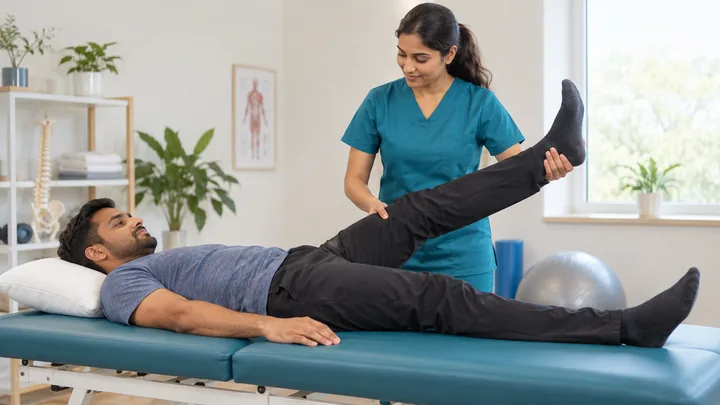
Individual assessment and movement guidance for back-related leg pain, with exercises adapted to your symptoms.
Sciatica describes pain associated with irritation or compression of the sciatic nerve, often travelling through the buttock and down one leg. Tingling, numbness, or weakness may also occur. Assessment helps guide suitable care and identify symptoms that need medical review.
Physiotherapy may include tailored movement and exercise, advice on staying active within your limits, and a gradual return to everyday activities. Care is adapted to your symptoms rather than applying the same exercises to everyone.
Seek emergency medical help for new numbness around the genitals or bottom, difficulty passing urine, loss of bladder or bowel control, or severe or worsening weakness or numbness in both legs. Do not wait for a physiotherapy appointment.

Guidance for hand tingling, numbness, and wrist discomfort, with care adapted to daily activities and symptom severity.
Carpal tunnel syndrome involves pressure on the median nerve as it passes through the wrist. It can cause tingling, numbness, or pain in the hand and fingers, often worse at night, and may make gripping more difficult.
Assessment considers your symptoms and how work, sleep, and everyday tasks are affected. Guidance may include comfortable wrist positions, adjustments to aggravating activities, and discussion of whether a wrist splint or selected exercises are appropriate for you.
Persistent or worsening symptoms, particularly increasing numbness or grip weakness, need medical review. Some people need further treatment beyond physiotherapy, so care is guided by the assessment rather than a promise of a cure.

A supportive space to discuss learning challenges, study habits, and educational goals with practical guidance.
Educational counseling offers a supportive conversation about learning challenges, study routines, and educational goals. It can provide space to explore concerns and think through practical next steps.
Guidance may focus on organisation, motivation, study habits, and manageable goals. The discussion is shaped around the person's needs and circumstances, with an emphasis on clear communication and practical support for learning.
Thoughtfully selected therapies and guided exercise, shaped around your comfort, movement, and individual needs.
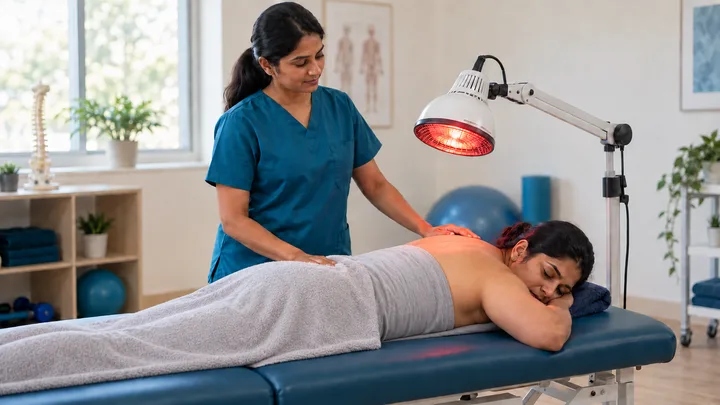
Gentle infrared warmth for local comfort, selected to suit your symptoms and sensitivity to heat.
Infrared (IR) therapy uses a lamp to provide warmth to a selected area of the body. Where appropriate, warmth may help ease stiffness and support comfort as part of an individual physiotherapy plan.
Your symptoms, skin condition, circulation, and ability to feel heat are considered before treatment. The warmth is adjusted to your comfort and monitored during the session. Heat is not suitable for every injury or medical condition, so treatment begins with an assessment rather than a standard routine.
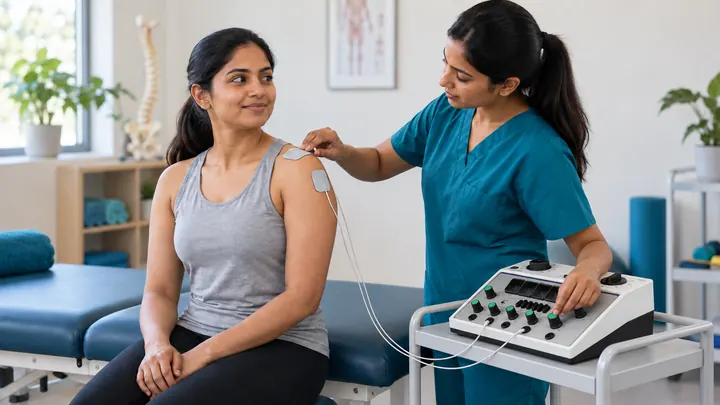
Gentle electrical stimulation that may provide temporary pain relief, following an assessment of suitability.
Transcutaneous electrical nerve stimulation (TENS) uses adhesive pads on the skin to deliver gentle electrical pulses. It may offer temporary relief for some types of pain, although it does not work for everyone.
The physiotherapist checks whether TENS is suitable and explains what to expect before starting. Please mention any implanted electronic device, epilepsy, pregnancy, reduced skin sensation, or skin irritation. TENS is considered alongside appropriate movement, exercise, and other care, not as a cure for the underlying cause of pain.

Hands-on soft-tissue care, with pressure adapted to your comfort and the areas that feel tight or restricted.
Myofascial release is a hands-on technique that works with muscles and their surrounding connective tissue, called fascia. The therapist uses sustained pressure and gentle movement around areas of tightness, guided by your assessment and feedback.
The aim is to support comfortable movement as part of a wider care plan. Pressure is adjusted to your tolerance, and you can ask to pause or stop at any time. Suitable exercises or movement advice may accompany the session; the approach and response vary from person to person.
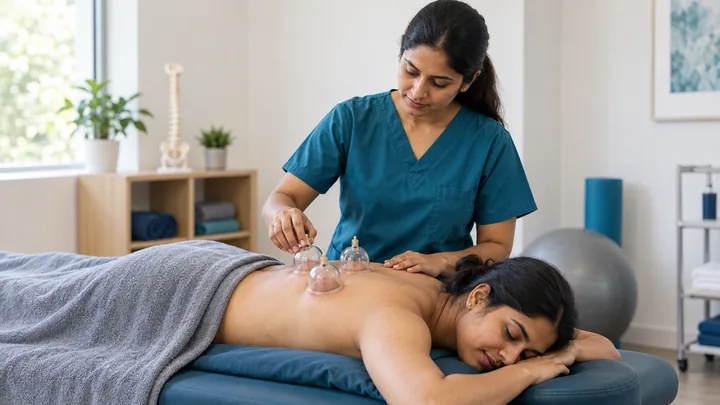
A suction-based treatment considered after discussing your symptoms, skin health, and preferences.
Cupping uses cups to create suction on the skin. Before treatment, the physiotherapist discusses your symptoms and whether this approach is suitable for your skin, health, and comfort.
Temporary circular marks and tenderness can occur, and other risks are discussed before you decide. Evidence for pain relief is limited, so cupping is not presented as a cure or a replacement for appropriate medical care and rehabilitation. The decision to include it is individual, and you can choose other treatment options.

Guided, gradually progressed exercises using suitable resistance to support strength and everyday movement.
A strengthening programme starts with your current ability, movement, and personal goals. Exercises are selected to help you practise controlled movements and build strength for tasks such as standing, walking, reaching, or lifting.
Depending on your assessment, resistance may include dumbbells and sandbags. The weight, technique, and progression are chosen for you and reviewed as your ability changes. Guidance focuses on manageable effort and good control, with adjustments when symptoms or comfort require them.

Guided exercises to support steadier movement, coordination, and confidence with everyday activities.
Balance and coordination help you stay steady when standing, walking, turning, or reaching. Assessment considers your current ability, how these movements feel, and the everyday activities you would like to manage with greater confidence.
Sessions may include controlled weight shifts, stepping practice, and coordinated reaching, with stable support and supervision where needed. Exercises begin at a suitable level and progress gradually according to your comfort and control. If you feel unsteady or have had a fall, discuss appropriate support before practising on your own.

Focused hand and finger activities to support dexterity, coordination, and control in everyday tasks.
Fine motor skills involve small, controlled movements of the hands and fingers, such as fastening buttons, writing, and handling everyday objects. Assessment considers your hand movement, coordination, and the tasks that matter to you.
Practice may include grasping and releasing objects, thumb-and-finger movements, pegboard activities, and hand-eye coordination tasks. Activities are adapted to your ability and progressed gradually, with a focus on useful everyday skills. Any pain, numbness, or fatigue is considered when selecting activities and deciding whether further assessment is needed.

Needle treatment considered after an individual discussion of your symptoms, suitability, and care options.
Acupuncture involves placing needles at selected points on the body. At Ceylora, your symptoms, medical history, medicines, and preferences are discussed before deciding whether to include it in your care.
Concerns you can discuss during an acupuncture assessment include:
Suitability and evidence of benefit differ between conditions and individuals. Listing a condition does not mean acupuncture is appropriate for every case. Expected benefits, possible risks, and other treatment options are considered together; acupuncture does not replace necessary medical assessment or rehabilitation.
A shared vision, a personal commitment to your wellbeing.
 Founder
Owner & Founder
 Physiotherapist
Owner & Chief Physiotherapist
SLMC Registration No. 1785
This is an appointment request only. Your appointment is confirmed after Ceylora Physiotherapy Clinic responds by WhatsApp, telephone, or email.
Consultations by appointment only.
| Mon, Wed, Fri–Sun | – |
|---|---|
| Tue & Thu | – |
Your experience can help someone take their first step towards care.
A few words can make a difference.
Get in touch
Call, WhatsApp, or email us to ask a question or arrange your visit.
+94769977399
Send the clinic a message
rkasuni99@gmail.com
For questions and appointment requests
This website is not an emergency service. If you have a medical emergency or severe, rapidly worsening symptoms, seek appropriate emergency medical assistance.